A planting calendar should begin with your actual season.
SowDates turns local temperature history into a clear plan for what to sow, start, and transplant. It gives every crop its own timing — because a useful garden calendar is more than a colored zone on a map.
Nearby climate history
Historical freeze and temperature data, matched as closely as possible to your ZIP code.
Windows, with actual dates
Enough room to choose a day that works for your weather and your schedule.
Crop-by-crop timing
Cold-tolerant greens and heat-loving fruiting crops each get their own plan.
From ZIP code to planting day
Here is what happens when you make a calendar.
We use long-term local patterns to make the next gardening decision easier to see. The result is a flexible guide, not a weather forecast.
01
Start with a place, not a zone.
Enter your ZIP code and SowDates finds the closest available NOAA 1991–2020 Climate Normals station. From that history, we use the typical last spring freeze and first fall freeze near your garden.
02
Choose your comfort with risk.
A frost date is a probability, not a promise. You can choose a more cautious or more adventurous frost likelihood, so the calendar can better match whether you cover plants, use row cover, or prefer to wait.
03
Turn those dates into crop windows.
Peas, peppers, tomatoes, and broccoli do not want the same start. We place each crop’s indoor-start, direct-sow, and transplant windows around your frost dates, then work backward from fall for crops that need time to mature.
Why zones fall short
Hardiness zones aren't enough to make a garden plan.
USDA hardiness zones are useful for choosing perennial plants: they describe an area’s average annual extreme low temperature. But they do not tell you the dates of your last spring frost or first fall frost—the anchors annual vegetables need.
Zones also leave out rain, humidity, summer heat, wind, elevation, soil temperature, and the cold pocket at the bottom of your own yard. A zone is a helpful clue; it is not a planting schedule. That's why our calendar uses a variety of data to make accurate windows.
The same zone can have different approaches:
Examples
Zone 6
Great Lakes · high plains · inland Northeast
A humid Michigan garden can warm slowly in spring, while a sunny, dry Front Range garden may swing from a warm afternoon to a freezing night. The label does not tell you when the soil is ready—or how sharp a late frost can be.
Zone 7
Appalachian valley · Kansas prairie · high-desert town
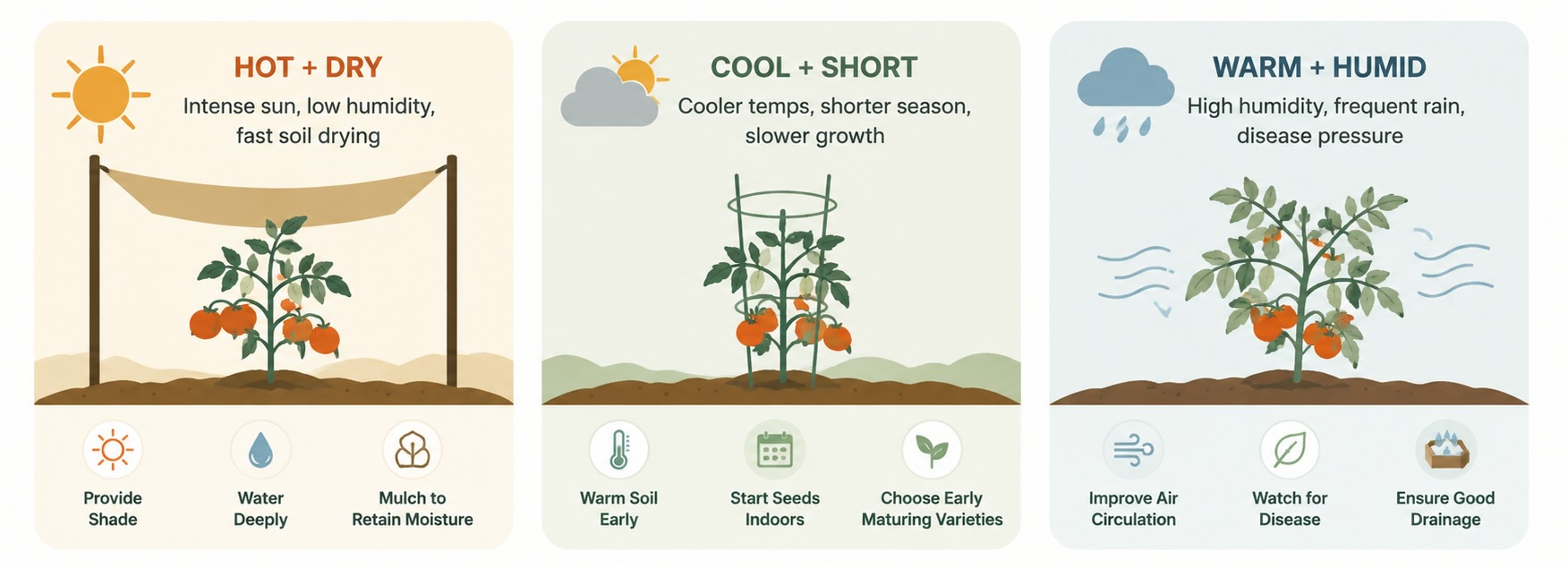
One gardener may contend with steady spring rain, another with wind and drought, and another with intense sun and chilly nights. All can share a winter-minimum zone while needing very different planting decisions.
Zone 8
Willamette Valley · Southern woodland · California foothill
Mild, wet springs; long, humid summers; and dry, hot growing seasons can all live under the same zone number. Their frost timing, summer heat, and watering needs are anything but interchangeable.
Use the calendar as a well-informed starting point.
Check the short-term forecast before you plant tender crops, wait for workable soil, and let your own garden teach you where frost lingers or warmth arrives early. With a few seasons of notes, your calendar becomes even more local.