Growing broccoli by climate.
Broccoli is a timing crop disguised as a hardy crop. Give it moderate weather to build leaves, cool steady weather to form a head, and a gardener ready to cut while every bud is still tight.
- Cool-season crop
- Usually transplanted
- One crown + side shoots
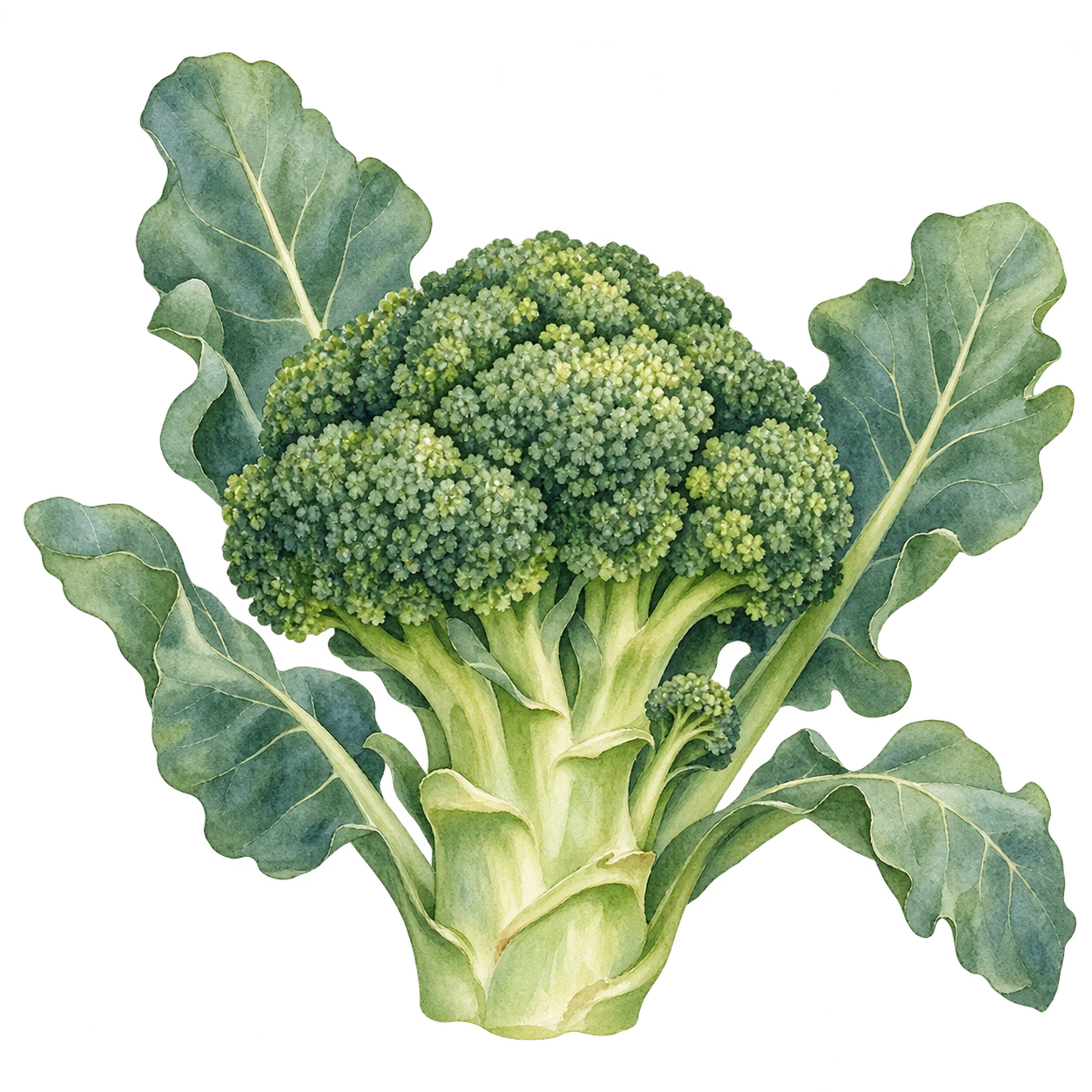
Schedule backward from the head
How broccoli develops to harvest
The edible crown is a cluster of unopened flower buds. A successful harvest happens when the plant can become large enough before head initiation, and the forming head can finish before heat, drought, or time opens those buds.
Build leaves
Moderate weather makes the plant frame that will support the head.
Initiate the head
Keep growth steady; cold shock and transplant stress can force a button.
Hold tight buds
Cool conditions and even moisture preserve compact, green florets.
Cut promptly
Harvest before the buds loosen or flash yellow—then wait for side shoots.
Why your local climate matters most
Tips for different climates
Summer heat, spring cold snaps, humidity, rainfall, and insect pressure can all change how and when broccoli builds leaves or heads. Your USDA zone only describes average winter lows, but there's more to it. See some example outcomes below. USDA map guidance
Hot low desert
Build the crop through fall and winter; keep head formation out of peak heat and favor quick, season-fit cultivars. Arizona calendar
Cold spring
A plant may survive cold yet button after a long juvenile chill. Use young transplants and temporary protection when cold persists. Minnesota Extension
Mild humid fall
Cooling weather suits heading, but scout for caterpillars and keep leaves dry with airflow, rotation, and soil-level watering. Georgia Extension
The broccoli window
Temperatures to keep in mind through development
Common guidance suggests soil at 50–65°F, days at 60–70°F, and nights at 40–55°F for optimal development. You can get your best yields when temperatures stay at or below about 75°F. Treat each range as such: plant age, cultivar, moisture, nutrition, and exposure length can move the edges.
Start
50–65°F soil
A useful range for establishment; sturdy young transplants are usually the best bet.
Build
60–70°F days
With roughly 40–55°F nights, the plant can make the leaf mass a full head needs.
Head + hold
Prefer ≤ ~75°F
Heat and low water loosen heads. Check buds often and cut before yellow appears.
The cold paradox: established broccoli can tolerate frost near 28°F, but a young plant chilled at the wrong stage may survive and still make only a tiny button. Utah State diagnosis
The favorable shoulder season
Can you plant broccoli in fall?
Often yes — and it may be the easier crop. Late-summer warmth helps build leaves; cooling autumn weather supports head formation. That is closer to broccoli's ideal sequence than a spring that races from cold to hot.
Work backward to find transplant date
Then count back again for seedling production if you are raising your own plants. Verify whether the packet counts from seed or transplant; colder than optimal weather can stretch any printed estimate.
Choose an early cultivar if the usable window is short.
Time head formation for cooling—not collapsing—temperatures.
Protect young starts from heat, caterpillars, and transplant stall.
Most common broccoli development issues
Buttoned or opening?
Both end in a disappointing head, but they happen at opposite moments, and need different prevention.
Buttoning: the head came too soon
A tiny head forms before the plant has enough leaves. Prolonged juvenile cold, an old oversized transplant, drought, or nutrient stress can trigger it. Choose compact transplants with about four to six mature leaves, harden them without stalling them, and keep growth even.
Opening: the buds went too far
A full head loosens, separates, and begins showing yellow as heat and flower development advance. Keep heading plants evenly moist, inspect more often in warm weather, and harvest immediately while buds are compact if initially yellowing shows. Compare the symptoms
Variety matters
The cultivar can change the planting dates and harvest.
There are dozens of Broccoli varieties. Read the packet for how quickly it matures, which season it was selected for, whether it follows the crown with side shoots, and which local diseases it resists.
As early as 50 days, up to 65+
Examples range from Packman at about 50 days to Premium Crop at about 65. Fifteen days can decide whether the head finishes inside your cool window.
There are heat-tolerant varieties.
A spring planting must resist opening and bolting with the increasing temperatures. Varieties like Belstar and Imperial are great for spring planting due to heat tolerance.
One crown, or weeks of shoots?
Heading types prioritize the central crown and may follow with smaller side shoots. Sprouting broccoli is selected for repeated shoots, which changes spacing, harvest frequency, and how long the bed stays occupied.
Harvest twice
Cut the crown. Keep the plant.
Harvest when the buds are compact, green, and closed—not when the head reaches an imagined maximum size. Cut the main head with several inches of stem, cool it soon, then keep watering the rooted plant. Many varieties respond with smaller side shoots. Georgia harvest guidance
Keep growth even
Deep, regular watering and adequate fertility support steady heads and the second flush. Avoid drought during heading.
Look inside the crown
Cabbageworms and loopers chew leaves and hide in heads. Row cover protects young plants only if pests are excluded first; keep scouting underneath.
Dry leaves, open air
Water at soil level where practical and give plants airflow. Wet foliage and crowded beds favor recurring leaf problems.
Rotate the whole family
Move broccoli away from cabbage, kale, cauliflower, and other brassicas for three to four years where space permits. Oregon State