Growing peppers by climate.
A pepper plant can survive weather that will not let it make peppers. The schedule must warm the roots, grow a protective canopy, and land the flowers between cold nights and punishing heat.
- Tender warm-season crop
- Best from transplants
- Green or fully colored harvest
Schedule the whole bridge
A frost-free date only opens the door.
Peppers need a long head start, warm roots, a large enough plant, flower-friendly air, and time for fruit to size and color. Skip one stage and the plant may remain leafy while the harvest disappears.
Start early
Raise sturdy transplants for 8–10 weeks; peppers are slow to earn their season.
Build the canopy
Move into soil at least 60°F and remove early flowers so roots and leaves establish first.
Bridge to fruit set
Keep flowers inside workable day and night temperatures with steady root-zone moisture.
Choose the finish
Pick firm green fruit—or spend more warm days developing full color, flavor, and heat.
Zone is only the winter floor
The same zone can need three pepper plans.
USDA zones summarize average extreme winter lows. They do not measure warm-soil arrival, hot-night duration, humidity, rain splash, solar intensity, or how many fruit-setting days fit between them. USDA map guidance
Hot low desert
Use the spring and late-summer shoulders. Preserve roots and leaf cover through peak heat with deep watering, mulch, and afternoon shade; flowering can resume as nights moderate. Arizona calendar
Cool short season
Start early, choose fast cultivars, warm the bed with black mulch, and protect young plants. Vent covers before trapped air overheats flowers. Utah State guide
Warm humid season
The thermal runway may be long, but warm rain spreads fruit disease. Favor drainage, drip irrigation, airflow, clean starts, rotation, and locally useful resistance. Florida disease guide
These are conceptual climate archetypes, not places assigned to one exact USDA half-zone. Local weather and Extension calendars take precedence.
The pepper fruit-set window
Warm roots. Moderate flowers.
The establishment threshold and the flowering window are not the same. Wait for warm soil, then protect blossoms from both cold nights and hot days. Wind and dry soil can narrow the bridge further. Oregon State guidance
Before transplanting: wait until after frost and soil is at least 60°F. Remove early flowers while the plant’s frame is small.
Cold nights
Below ~55°F
Nighttime air
Flowers may abort even while the plant stays green.
Best fruit set
70–80°F
Daytime air · 60–70°F nights
Steady warmth and root-zone moisture support flowers and developing fruit.
High heat
Above ~90°F
Daytime air
Fruit set can pause. Keep the plant healthy and wait for better weather.
Approximate planning ranges. Compare the day and night readings separately; variety and conditions shift the edges.
The quiet failure: poor set is not always a pollination problem. Temperature, dry soil, hot wind, and a too-small transplant can each make blooms drop. See Utah State's diagnosis
The second shoulder
Can you plant peppers in fall?
Yes—if warmth outlasts the fruit. A long, mild fall can reopen fruit set after summer heat. A short fall may produce flowers or green fruit that never reaches the color you wanted.
Work backward from the finish
Check whether packet days begin at transplant and whether they promise the first green pepper or full ripe color. Fruit can need roughly 35–45 days from flower to full color, depending on temperature and variety. Color timing
Choose an early cultivar if the warm runway is short.
Count full color as a later harvest than mature green.
Keep summer-carried plants watered, shaded, and leafy enough to restart.
Phoenix example
Two transplant doors, one severe summer.
Maricopa County marks pepper transplants around February 15–March 15 and July 1–July 15, with roughly 90–120 days to harvest. The July start needs reliable irrigation and temporary afternoon protection while it establishes; watch local whitefly pressure as fall approaches. Open the county calendar
Pepper-specific diagnosis
Sunscald or blossom-end rot?
Both worsen during hot, unevenly watered weather—but the damage appears in a different place and points to a different secondary fix.
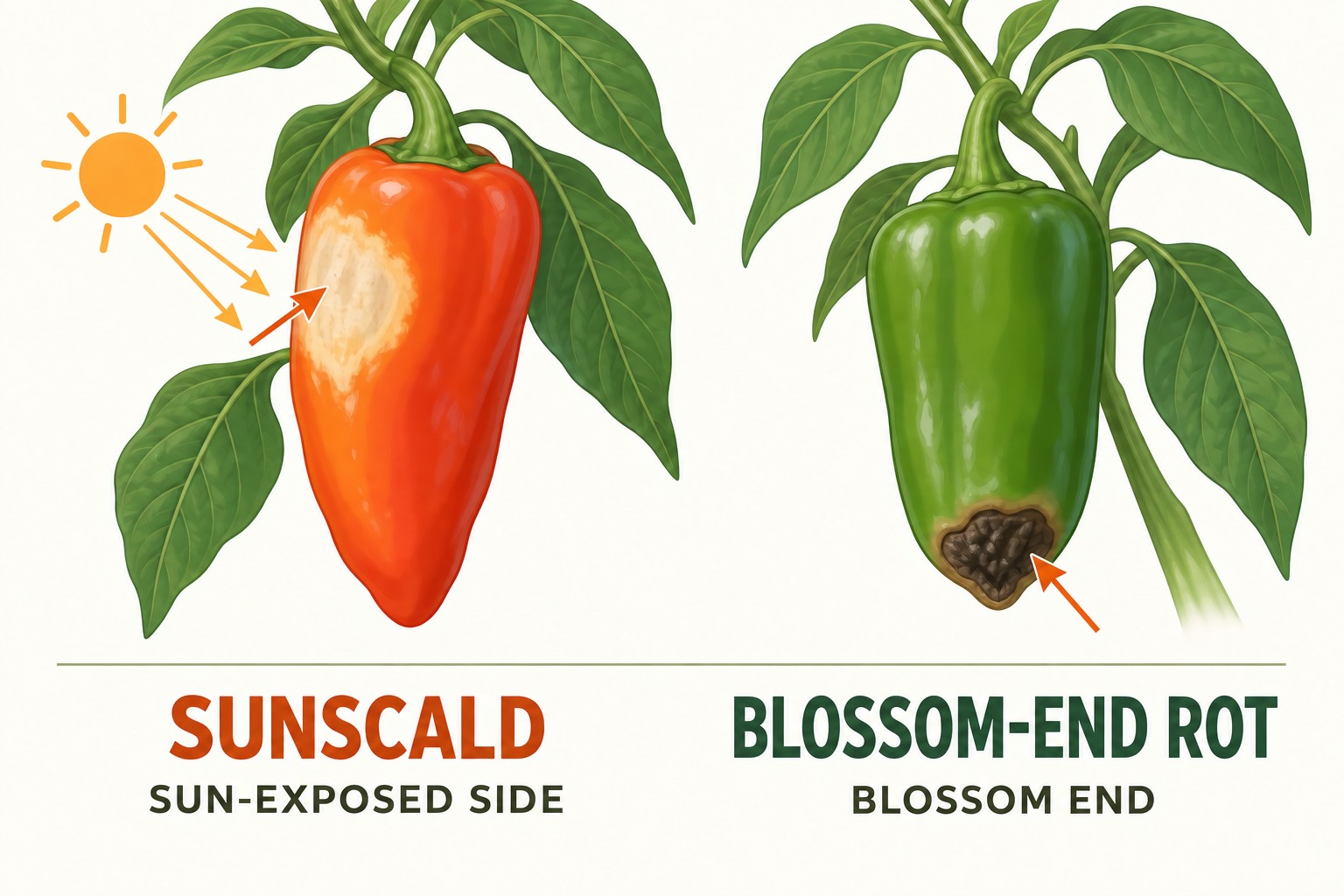
Sunscald: the exposed side
A pale, tan, or whitish patch forms where direct sun overheats the fruit. Preserve leaf cover, harden transplants, and add afternoon shade where solar intensity is severe. Do not strip healthy leaves just to expose fruit.
Blossom-end rot: the fruit tip
A dark, sunken, leathery patch forms at the blossom end when water imbalance disrupts calcium movement. Stabilize root-zone moisture, avoid root injury and excess nitrogen, and do not assume a calcium spray alone will solve it. Compare the disorders
Variety matters
Pick a pepper that fits your season.
Varieties differ in how quickly they mature and in the size, shape, and heat of their fruit. Match one to your growing season and the stage you want to harvest—green or fully colored. Even hot peppers can be damaged by extreme heat or cold.
Early fruit buys climate insurance.
An early cultivar can set and size before heat or frost closes the window. Confirm whether packet days begin at transplant and which color stage they describe.
Bell, frying, jalapeño, poblano, cayenne.
Fruit size, wall thickness, canopy habit, harvest stage, and intended use all change the practical schedule. Smaller or early types often fit short windows better. Explore pepper types
Green is earlier; ripe color spends time.
Green peppers are immature. Red, orange, yellow, or other ripe colors need more warm days. Pungency is principally a cultivar trait—not permission to expose a hot chile to flower-aborting heat.
Match the garden's history.
Use local trials and resistance labels where viruses, bacterial spots, anthracnose, or soilborne wilts recur. Resistance supports—but does not replace—clean starts, rotation, drainage, and pest control.
Harvest without ending the season
Pick the stage you meant to grow.
Harvest fruit firm, plump, and smooth at mature green or full color. Cut rather than tug if branches are brittle, and pick regularly while the weather still supports flowering. Many peppers need about 35–45 days from bloom to full color. Utah State harvest guide
Water evenly. Dry-wet swings drop flowers and raise blossom-end-rot risk.
Keep the canopy. Healthy leaves shield fruit from sunscald.
Pick cleanly. Pruners reduce the chance of breaking a loaded branch.
Rotate the family. Include tomatoes, potatoes, and eggplant when planning a nightshade break.